


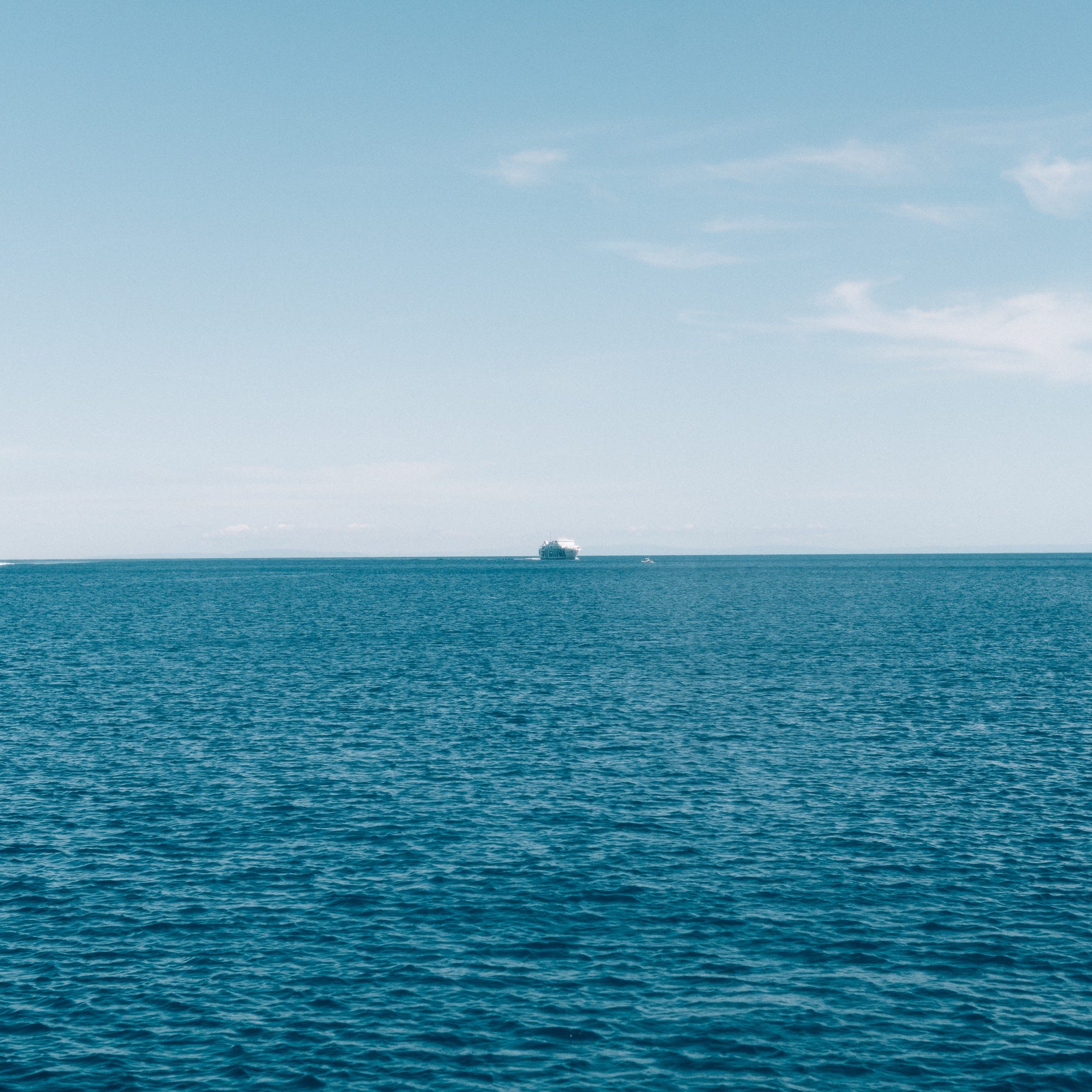
Every July in Santa Marina, they grease a long wooden pole, suspend it horizontally over the sea, and invite young men and women to walk it.
It has been happening since 1783. The pole is coated in soap and tallow. It bends slightly over the water. The goal is to reach the flag at the far end without falling. Almost everyone falls. Many times. They climb back up and try again, dripping, laughing, while the crowd on the dock goes absolutely feral.
It is called the Antinna a Mari. It is the oldest water competition in Sicily. My mother was there yesterday in her official capacity as the event doctor — because of course she was, this is my family — and I was there with Fabio, Erica and Nasim, standing on the dock in the July heat feeling something I wasn’t expecting.
I felt exactly where I was supposed to be.
Which, for someone who used to be on the pole, is saying something.
I did this at 10, 12 and 14.
Not recklessly — I was always careful not to push past my limit, not to risk something I couldn’t recover from. But I did it. I stepped on the greased pole over the sea with the particular courage of someone who has nothing to lose, everything to discover, and a body that still trusts itself completely.
At 21 I jumped out of a plane in Australia. Free fall for a minute. I loved every second and felt no fear — not before, not during, not after. I did everything to get on that plane including entering a wet t-shirt competition to win the money because the skydive was too expensive and I wanted it too much to let something as inconvenient as the price stop me.
I am not telling you this to impress you. I am telling you this so you understand: I was not always someone who stood on the dock and provided peach granita.
Yesterday at the pole my competitive nature stirred immediately. I didn’t want to participate — I wanted to win. Which is, incidentally, also the reason I stopped competing seriously years ago. I liked the prize too much and stopped enjoying the journey. The problem with being very competitive is that second place feels like losing, and losing feels terrible, and at some point you have to ask yourself if that’s really how you want to spend your days. Long story, another letter.
But the wanting-to-win passed quickly. And what replaced it surprised me.
Nasim fell badly on her first attempt and decided — maturely, bravely, with far more self-awareness than I had at her age — that that was enough for her. I respected that completely. Fabio went further than either of us expected, and I am almost certain we were both singing Defying Gravity from Wicked in our heads while he did it. He was so proud. I was so proud of him. The Wicked soundtrack was fully justified. (It always is.)
And then there was Erica.
Erica is so much a younger version of me that it occasionally terrifies me and always delights me. She looked at me before her last attempt with a look I recognized immediately — because I have made that face — and said: I am bringing it home, Anita.
She nearly did. I screamed so loudly that the entire curve of children on the dock started cheering with her. The whole dock. For Erica. Because of my voice and mostly because of her.
I stood there carrying the bags, handing out granita, hugging Fabio and giving Erica my swimsuit when she lost part of hers falling so she could keep competing, losing my voice for people I love — and felt more joy than I would have felt winning anything.
I think about this a lot, running a hotel.
Principe is built around one belief: that taking care of people is not a service. It is a way of being. And what nine seasons have quietly taught me — the way islands teach things — is that the joy is not in the doing. It is in the watching. The moment a guest exhales and stops performing. The table that starts quiet and ends loud. The person who arrived tired and leaves restored.
The dock in Santa Marina felt exactly like that.
Because somewhere along the way — and I couldn’t tell you exactly when — caring for people stopped being the thing I did alongside living and became the thing that makes me feel most alive. Noticing when someone needs something before they ask. Carrying the bags so the people I love can climb the pole without worrying about anything else. Buying the granita. Cheering so loudly that strangers join in.
This is what Principe has taught me. Not hospitality as a technique. Hospitality as a way of being in the world.
I think we all start on the pole.
Young, slightly reckless, climbing because the flag is there and we want it and the worst that can happen is we fall in the sea and climb back up laughing. The leap is simple when you have nothing to lose. When the body trusts itself. When the only person you are responsible for is yourself.
And then life accumulates. People you love. Things you’ve built. Stakes that didn’t exist before. And the leap changes shape — not because you’ve become less brave, but because bravery itself has changed its meaning.
Yesterday I understood something standing on that dock:
The leap, at 41, looks like showing up completely for the people in front of you. It looks like carrying the bags so someone else can climb. It looks like cheering so loudly that the person on the pole knows — even from that distance, even covered in soap and tallow and salt water — that someone on the shore is entirely, unreservedly, embarrassingly loudly on their side.
That takes courage too.
Maybe more than the pole ever did.
Con affetto,
Anita
P.S. My mother was the event doctor. She has always been exactly where she was supposed to be. I think I learned it from her — though she would never say so, because that is also something I learned from her.
P.P.S. They are all winners in my eyes. I have the best team. We might be bringing it home in August. I will bring the granita and what remains of my voice.